


What is Labour Market Information?
|
You can use this information to find out about different job roles and the sectors that these roles are in. It will allow you to identify the skills and qualifications that are required for job roles, so you can plan your career path.
Looking at LMI is an important way for you to develop your knowledge of different job roles that are available and the career paths that can be taken. From this information you will develop an awareness of the local and national job growth sectors, allowing you to make informed decisions about your future aspirations. By using LMI you will be able to plan realistic goals relating to your choice of career and aspirations.
Growth sectors in Milton Keynes:
The Careerometer tool will help you to compare different job roles that you may be interested in. It uses up to date labour market information collected by LMI for All. It will show you data relating to pay, weekly hours of work and future employment prospects for the job role you select. To use the Careerometer all you need to do is click on one of the cards below. Simply type in the first career that you think you might be interested in and select from the drop-down list. This will then give you the pay, hours of work and future employment prospects for that job role. You can then click on the other two cards to add your second and third choices to see the comparison. Use the link below to compare up to three job roles: Please see below a short video highlighting the way the world of work is changing: //www.youtube.com/embed/59d3UZTUFQ0#t=0.5
You can find out more about Labour Market information via this site - Labour Market Information | Jobs Market Information The Impact of AIArtificial Intelligence (AI) is expected to change many jobs over the next ten years. Instead of simply replacing workers, AI will mostly change the way people work and create new types of jobs.
First, AI will take over some routine and repetitive tasks. Computers can analyse large amounts of data, recognise patterns, and answer common questions quickly. Because of this, jobs that mainly involve repeating the same tasks are most at risk of automation.
Some jobs that may be affected the most include:
However, AI will also create new job opportunities. There will be growing demand for people who can design, build, and manage AI systems, such as software developers, data scientists, and AI engineers. Other roles will focus on checking that AI systems are fair, safe, and used responsibly.
Many existing jobs will work alongside AI rather than being replaced by it. For example, doctors may use AI tools to help diagnose diseases, teachers may use AI to create learning materials, and engineers may use AI to design better products. In these cases, AI helps people work faster and make better decisions.
Because of these changes, skills such as problem-solving, creativity, communication, and teamwork are difficult for AI to copy and will be highly valued. Digital skills, such as understanding technology and data, will also become more important in many careers.
Finally, people will probably change jobs more often and keep learning throughout their lives. As technology develops, workers may need to learn new skills or retrain for new roles.
In summary, over the next decade AI is likely to automate some tasks, change many existing jobs, and create new careers. People who are adaptable, creative, and willing to learn new skills will be best prepared for the future world of work.
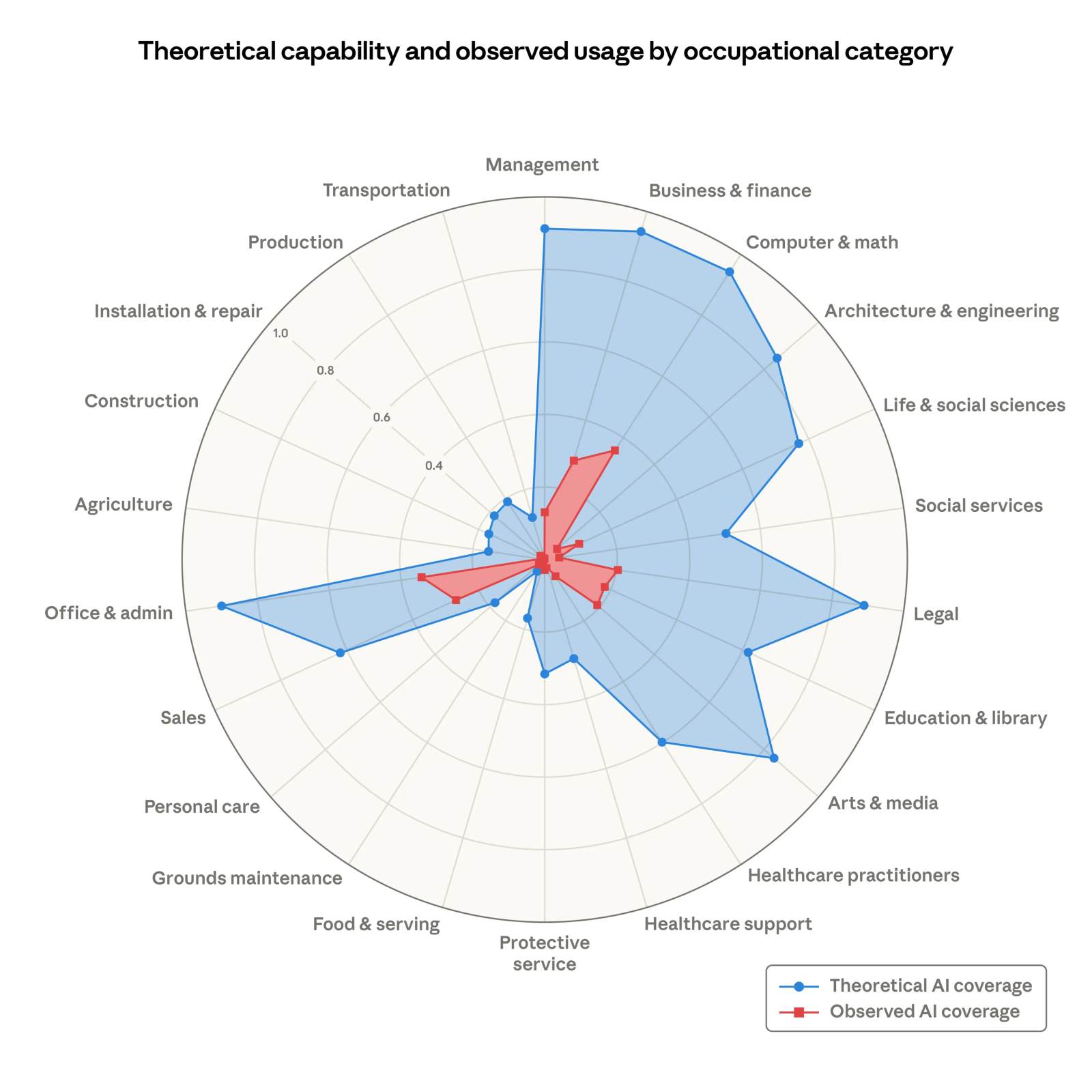
The chart shows in red where AI is already at work and in blue where AI is likely to impact over the coming years. Not necessarily replacing jobs but streamlining them to make them more efficient.
|
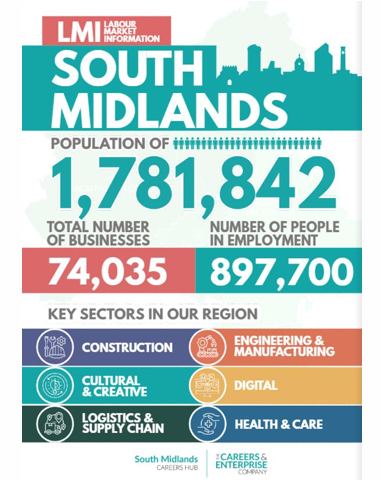 Labour market information is information relating to the world of work, employment trends, job roles and job availability. It includes a wide variety of data and analysis related to employment and the workforce.